
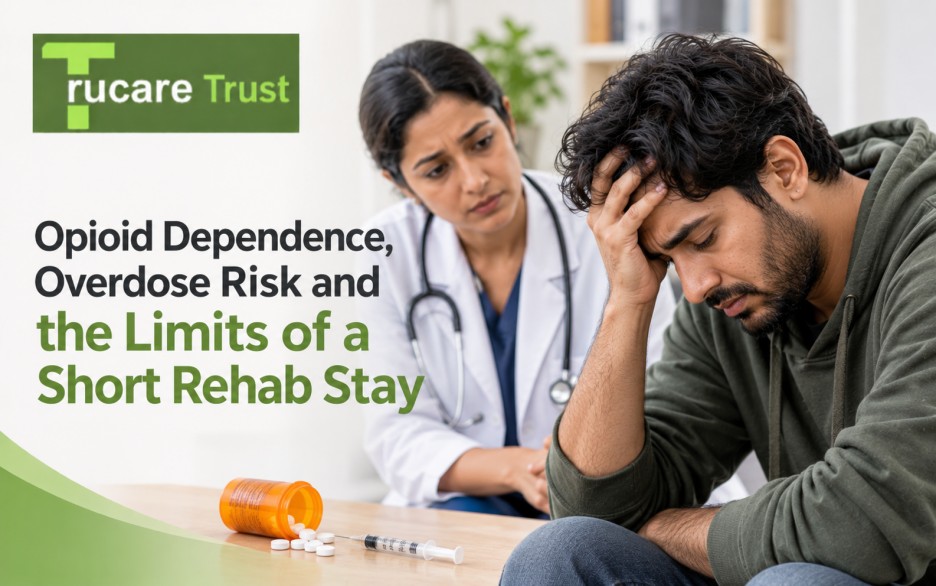
After several weeks away from opioids in residential care, a person may return home believing that the amount they once used is still tolerable. That can be fatal. Tolerance decreases during abstinence, while the memory of a previous dose remains. This is one reason a discharge plan for opioid dependence must look beyond the number of days spent away from the substance.
Opioids include heroin as well as some prescription pain medicines. They affect breathing and can lead to dependence and overdose. Warning signs of overdose include very slow or absent breathing, unresponsiveness and blue or grey lips. Call emergency services immediately if overdose is suspected. Emergency responders and trained people may use naloxone where available; breathing support and urgent medical assessment remain essential.
According to the United Nations Office on Drugs and Crime’s *World Drug Report 2025*, about 61 million people worldwide used opioids in 2023. This is a global use estimate, not the number of people with opioid-use disorder. India’s national survey released in 2019 estimated around 77 lakh people needed help for opioid-related problems. Different populations, years and definitions mean these figures cannot be directly compared.
Dependence is not managed by willpower alone
Clinical assessment should identify the opioid used, dose, route, duration, past overdoses, other sedatives or alcohol and any psychiatric or physical conditions. Where medically appropriate, opioid agonist treatment, including buprenorphine or methadone prescribed and monitored by qualified clinicians, is an evidence-based option. Abrupt or poorly supervised withdrawal without continuing care can leave people vulnerable to renewed use and overdose.
When a family contacts a drug rehab centre Mumbai, it should ask whether medication treatment is available directly or through an established referral, who manages emergencies, and how continuity is maintained if the patient moves between services. A centre that offers only isolation from substances may not meet the needs of someone with opioid-use disorder.
Care for stimulants, cannabis, sedatives or mixed substance use differs. The phrase drug addiction treatment should therefore prompt questions about the precise diagnosis and the planned intervention rather than acceptance of a single standard package. The presence of alcohol dependence alongside drug use can change withdrawal risk and should be disclosed during assessment.
The arrangements after discharge can be as important as the stay itself. Suppose a person returns to a small flat in Mumbai while the relatives who supported admission live elsewhere. Who will accompany them to the next medical review? Is there a pharmacy or authorised treatment service able to dispense any prescribed medicine? What happens if an appointment is missed because of work or travel? Write down the answers before discharge. India’s addiction-treatment system includes public and private services, but the availability of opioid agonist treatment and overdose-response resources varies by facility. Families should verify local access rather than assume every rehabilitation centre can provide it.
A discharge plan needs names and dates
‘Come back if there is a problem’ is not an adequate follow-up arrangement. A useful plan specifies the next medical appointment, medication arrangements where applicable, a person to contact after a lapse, family support options and steps to reduce exposure to high-risk situations. It may also address accommodation, employment and outstanding legal or financial concerns.
Relatives need to know that a lapse can be a medical safety issue, not merely a breach of discipline. Avoid threats that force someone to hide use. Encourage early contact with the treating team, reassessment of overdose risk and timely review of the care plan. Overdose prevention and recovery support should not depend on a person having a perfect record.
The highest-risk moment may be after a period of abstinence
Imagine someone who previously used opioids daily, completes a stay in a facility and then returns to the same neighbourhood. They may remember a familiar dose but no longer have the tolerance to survive it. Family members should understand this risk before discharge. A clinical plan ought to include overdose education, access to appropriate treatment, and information about naloxone where available through local healthcare systems. Do not rely on a patient promising that they will never use again.
A suspected overdose is an emergency. The person may be difficult to wake, breathe very slowly or make abnormal snoring or gurgling sounds. Call emergency services and follow trained instructions for breathing support and naloxone, if available. Waiting for the individual to ‘sleep it off’ can be fatal. Other sedatives and alcohol can make opioid-related breathing suppression worse.
Why medication continuity matters
Evidence-based opioid treatment may involve buprenorphine or methadone delivered by qualified services. Whether either medicine is suitable depends on assessment, access, medical history and local prescribing rules. For many patients, continuing medication and follow-up are central to reducing risk; stopping all treatment at an arbitrary discharge date may remove an important protection. Patients deserve an explanation of benefits, risks and alternatives, not moral arguments about whether medication counts as ‘real recovery’.
The UNODC’s 2025 global estimate of 61 million people using opioids in 2023 captures a very broad group. It does not tell us which medication one person in Mumbai needs. That requires a history of use, past overdoses, mental and physical health, and informed consent. Worldwide figures help explain the scale of a problem; they cannot replace an individual prescription.
What relatives can plan without policing every hour
Ask where follow-up treatment will take place, how appointments can continue when someone returns to work, and whom to contact if a dose or appointment is missed. If the person has chronic pain, its care needs attention as well. Pain left untreated can complicate recovery, while prescribing decisions require careful clinical judgement.
Families often want complete certainty. That is understandable, but constant searches of belongings and threats of expulsion can encourage secrecy. It is more useful to agree on immediate safety steps, respectful boundaries and early access to professional advice after renewed use. Successful care reduces overdose risk and restores functioning; it is not measured by how frightened a family can make someone of admitting a setback.
Some families want a long admission because it feels safer. Duration alone tells little about quality. The better questions concern clinical assessment, evidence-based medicines when indicated, transparent consent and what will happen on the first difficult evening after the person returns home.